Naoshima Meeting
2025
From Bringing to Venice What
Marco Polo Forgot to the
Naoshima New Museum of Art:
The Trajectory with Asian
Contemporary Art 1995–2025
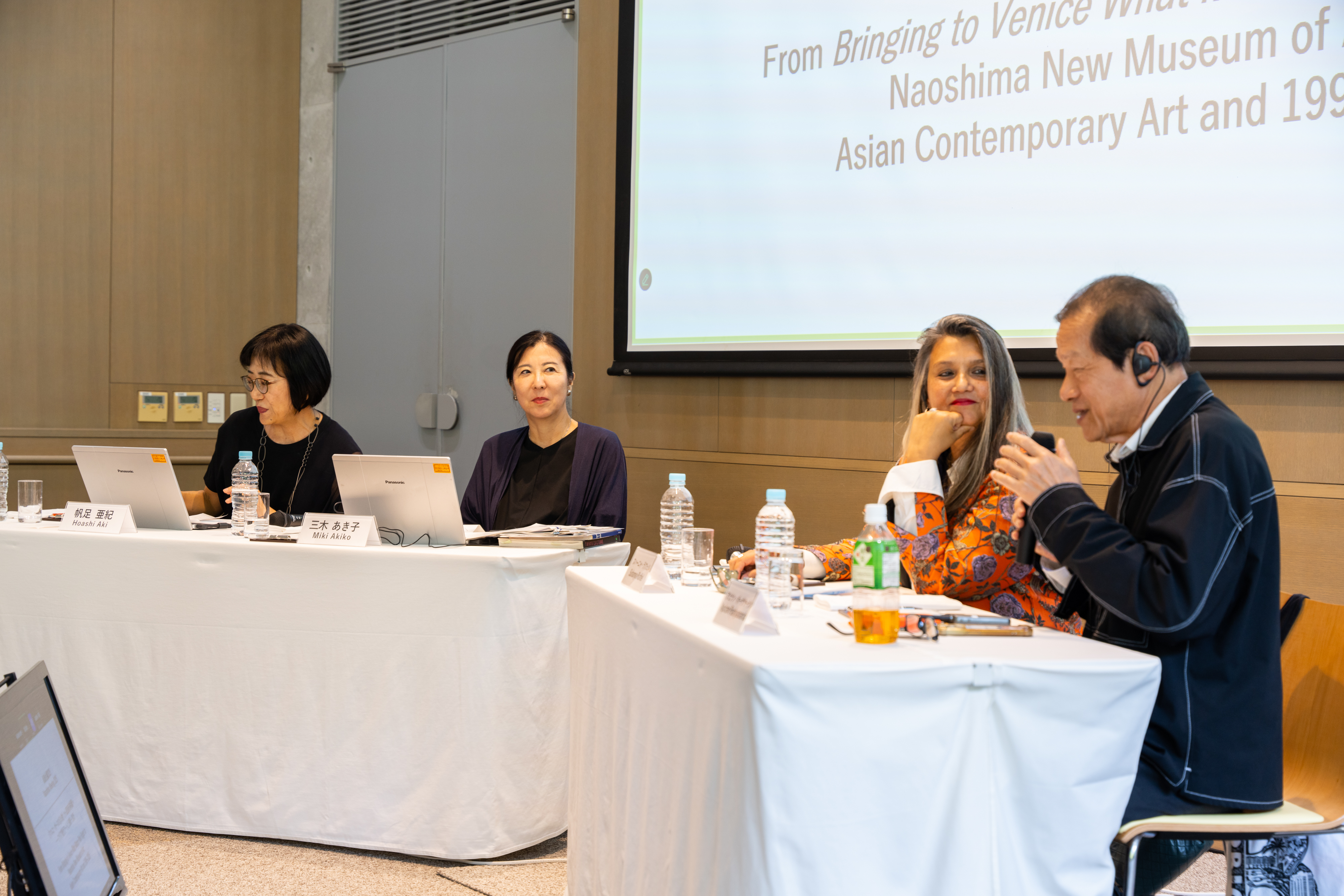
Naoshima Meeting
2025
From Bringing to Venice What
Marco Polo Forgot to the
Naoshima New Museum of Art:
The Trajectory with Asian
Contemporary Art 1995–2025
-
6. Discussion (Moderator: Hoashi Aki)
Discussion (Moderator: Hoashi Aki)
Hoashi:
My name is Hoashi Aki, and I will be moderating today's discussion. Ms. Miki spoke about the history and development of Naoshima, as well as its current position today. Mr. Poshyananda spoke about his own career, focusing in particular on the Bangkok Art Biennale he has been involved with in recent years, and on the relationship between audiences and communities. Ms. Raffel spoke about museum-making in Australia that began through collaboration with the professionals in the Asia-Pacific region, and about the activities of M+, a museum based in Hong Kong, that engages with the world while placing Asia at its center.
As everyone has focused on the present time in their presentations so far, in the discussion to follow, I hope we can trace the development of art in the different parts of Asia over the last thirty years to better understand its current state. Mr. Poshyananda, you mentioned that the Bangkok Art Biennale attracted one million visitors. I remember visiting an exhibition at Chulalongkorn University when you were still teaching there and the art scene was quite different then. The idea of a million people engaging with art in public spaces seemed almost unimaginable at the time. I would be curious to hear your perspective on the shifts that have occurred since the 1990s, and the strategies that allowed you to build such a massive audience today.
Apinan Poshyananda:
OK. Thank you for the question, Aki. We go back a long time, to the days when I was teaching. I had just returned after completing my Ph.D. at Cornell University in Ithaca, New York. I had some experience in organizing exhibitions. I wouldn't call the work curating because, in those days, being a curator was unheard of. There were curators in places like museums with artifacts, but there wasn't much of a role for curators of contemporary art. Anyway, I was given this space on the seventh floor of the main library at Chulalongkorn University to show some art. It was more like an experimental art lab, because we had opened the Faculty of Fine and Applied Arts just a few years before. So the question was, how can we make contemporary art educational and persuasive, as well as interesting? But in the context of Chulalongkorn University, a very conservative school, we had to have audiences go up to the seventh floor to see the artworks.
We showed some boring art at first, but that was essential. I think it's part of life. But the more we experimented, the more we considered the potential among young art teachers as well as young artists. It thus became a place where artists can let loose their creativity. Even without a real annual budget, we supported them, and we made admission free for audiences. Then, I had some ideas. When I came to Tokyo, Toshio Hara introduced me to Nobuyoshi Araki. You can imagine what came after that.
We invited Araki to Bangkok to do some projects and maybe show some works. As you know, Toshio Hara was with the Hara Museum at the time, as a contributing patron for Japanese art. Araki came with his assistant, and we took him around with a camera to record his creation process, then displayed his works. It was very controversial, as you can imagine, raising many questions, but we somehow got through it. A year after that, we invited Yasumasa Morimura, who also came to Bangkok. And Morimura actually not only showed his major works, he also performed with one of our young live bands, which was absolutely amazing. In this way, it became like a laboratory with no budget, asking artists to come over with no payment.
Then, at the first Echigo-Tsumari Art Triennale, co-organized by Fram Kitagawa, I met Marina Abramović. I asked her, "Can you come without being compensated?" She said, "OK, let's bargain. If I come, you'll give me durian. Do you know durian? It's a very tasty but smelly fruit. I eat it every morning with soy milk." I said, "OK, no problem. We'll supply that." Anyway, she came, and she made a beautiful performance in our little laboratory. Those were crucial years for APT 1992, '93, '94, '95, and '96. Very crucial years. In 1996, I was invited to do a major show in New York called Contemporary Art in Asia: Traditions/Tensions, where I chose artists from Thailand, the Philippines, Indonesia, South Korea, and India to show at the Asia Society, the Queens Museum and the Grey Art Gallery.
That was a big move in terms of presenting contemporary Asian art to New York audiences. It was not successful, but to do something, you cannot feel fear. By "not successful," I mean New York critics did not receive it positively. The New York Times wrote, "Is that contemporary Asian art?" But some said, "OK, there are some good works. The names are too long. Maybe Heri Dono is OK." So it was a kind of education for New York audiences. But in the short term, it traveled to Vancouver. It traveled to Perth. It ended up in Taipei after two and a half years. And along the way, people became very interested. They said, "Oh, there is something here. We can create a curriculum. We can do studies." So, it just went from there, that's how I started. It just took off, garnering a lot of attention from many people and institutions interested in contemporary Asian art.
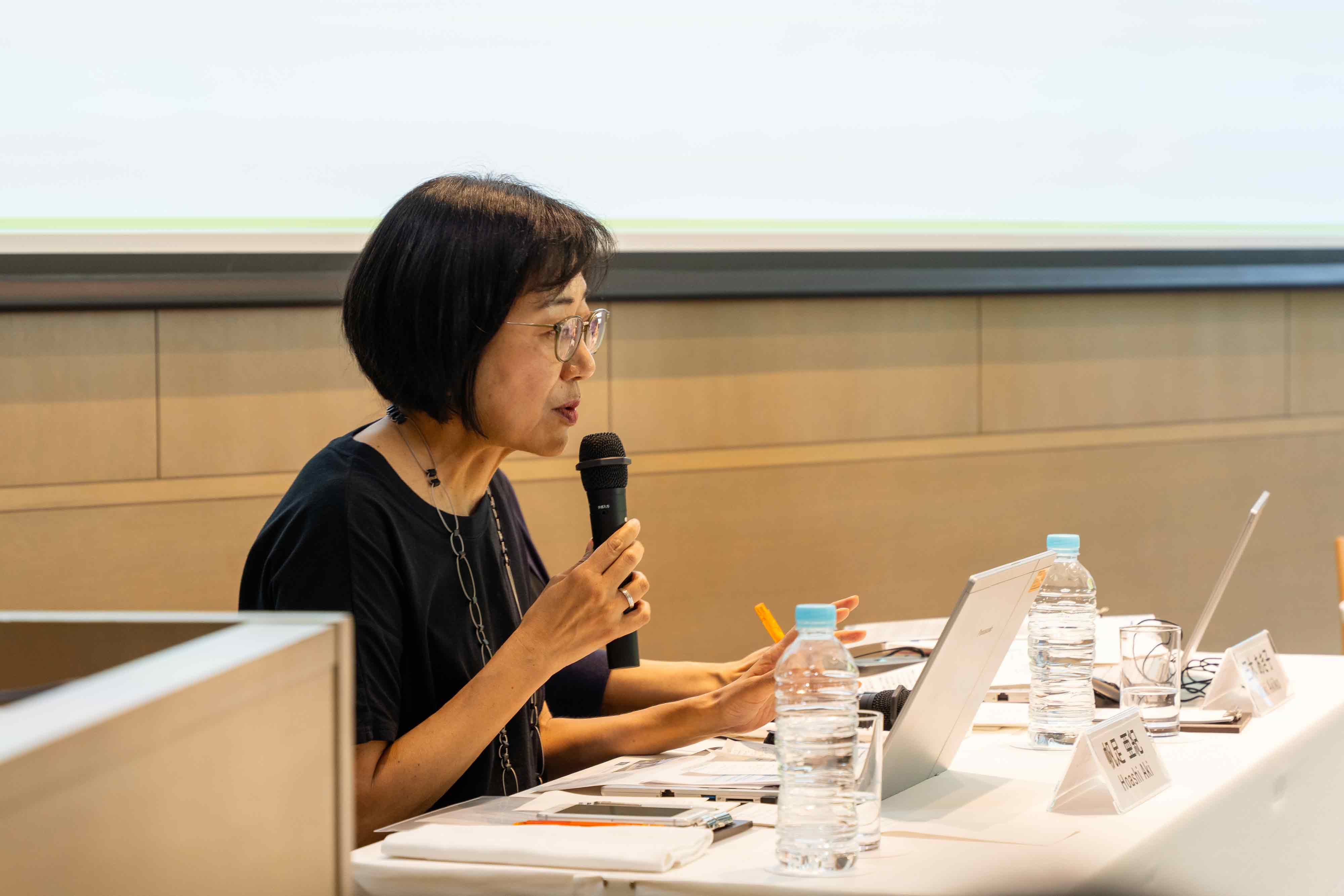
Hoashi:
Mr. Poshyananda spoke about how he conducted research in Japan through various forms of engagement with Japan, despite the fact that his budget was very limited. Also, he mentioned how, although the critical response to his exhibition in New York was not necessarily favorable, the time he devoted to researching on and working with art in Asia between 1992 and 1996 was essential to introducing Asian art to New York. Ms. Raffel, would you like to follow up on this?
Suhanya Raffel:
Yes, I just wanted to say that when the Asia Pacific Triennial started in 1993, the audience count was 30,000. That was considered a lot at the time, but still, it was small. I forgot to mention that Australia's decision to embark on this was largely about grappling with the issues of identity and Australia understanding its relationship to its neighboring geography. Huge diasporas formed Australia, including Vietnamese, Koreans, Indians, Chinese, and Pacific Islanders. Those people are now Australians, too. So, it's about recognizing what constitutes an Australian.
I think Apinan mentioned the very important issue of art education. I think art education in colleges, for those learning to be artists as well as the institutions educating audiences, is about what you choose to study: the histories, the regional and interregional histories, which were not necessarily taught thirty years ago. The then teaching was about European and North American histories. It was time to also start seeing our histories. Another very important observation is the role of the Japan Foundation, which was critical in expanding knowledge within the region, but also in bringing key figures like Akiko Miki and Fumio Nanjo to Australia, and others to Japan.
Hoashi:
Ms. Raffel highlighted the role of "art education" and the way opportunities for engagement expand when cultural institutions like the Japan Foundation establish frameworks that allow professionals across different fields to connect and form networks. In the 1990s, although Asian contemporary art was still being defined, Australia's interest in the region was expanding, fueled by the growing Asian-descent population.
Ms. Miki, as someone who was working in Japan in the 90s and on the ground at the Palais de Tokyo since 2000, how were you thinking about Asian contemporary art around that time?
Miki:
What Apinan and Suhanya spoke about was very much the story of the 1990s. What is important, as Apinan pointed out, is to think in the long term and to introduce Asian contemporary art to Western societies in an educational sense, even if it is not initially received in a very positive light. And as Suhanya mentioned, it is also important that in the 1990s, there were two parallel movements. On the one hand, there were organizational efforts to build research and educational networks, such as those centered on the Japan Foundation's Asia Center or the Asia Pacific Triennial at the Queensland Art Gallery. On the other hand, there were more grassroots initiatives driven primarily by the artists and curators themselves.
At the same time, as I mentioned earlier, with regard to how Asian contemporary art was viewed in Japan in the 1990s, the "Asian art boom" often felt somewhat inward-looking, as if the enthusiasm were confined to a limited circle. Yet it was also, I think, precisely because of that period that, from the 2000s onward, a new generation of curators came to take a strong interest in Asian contemporary art. Examples include Jérôme Sans and Nicolas Bourriaud, the first directors of the Palais de Tokyo. Cities on the Move, the exhibition I mentioned earlier, focused on the energy of Asian cities and was curated by Hans Ulrich Obrist, another next-generation curator.
The Palais de Tokyo in Paris is an initiative of the French Ministry of Culture, but as the contemporary art world became increasingly globalized, there was a growing recognition that it was not enough to look only at art close to home; it was also necessary to turn attention to non-Western art from regions such as Asia and Africa from a broader perspective. I joined the Palais de Tokyo because of my strong connections with Asian artists, but there was also a need in France for curators who had networks spanning many different regions.
From a European perspective, this was a period in which the Cold War structure had come to an end and competition among cities was intensifying as part of the broader social context. Cities such as Berlin and Istanbul were gaining strength. The 1990s were even described as a time when people would say, "Paris used to be great, but in contemporary art Paris is not so exciting." In this climate, the emergence of a new generation of curators with a global outlook, those who sought to draw out the appeal of cities by looking beyond art from Europe and North America alone, was extremely significant. At the Palais de Tokyo, for example, there were exhibitions of artists such as the Thai artist Navin Rawanchaikul, and the 1990s and 2000s can be seen as an important turning point when Asian artists began to appear as a matter of course on the international contemporary art scene.
Hoashi:
Apart from the increase of the population of Asian descent in Australia, perhaps you could share with us how you conceptualized Asia as a collective plane or region. From a curatorial perspective, how have you approached the idea of the "Asia-Pacific" as a framework?
Suhanya Raffel:
Yes, that is a very good question. When we began the Triennial, its contemporary practice from the region was largely unknown. In the first decadeーfor the APTs 1993, 1996, and 1999ーwe adopted a curatorial structure of "advisors" and "co-curators." Apinan and Akiko were our co-curators. It was very important to invite people who knew their regions well, because if you do not have that knowledge, you must ask. By 1999, the group had become very large. We invited curators as if they were artists; I think there were around 80 co-curators and 82 artists. At the same time, Queensland Art Gallery faced considerable criticism for investing in this way. But what it actually achieved was the creation of a network. It became a close-knit community that, even after leaving Queensland Art Gallery, never fully left; they still return to advise, if no longer formally. It became a "place for dialogue," a forum for building inter-regional connections.
This networked group helped the museum understand what was happening on the ground. Being an institution that staged recurring exhibitions allowed us to build an in-house expert team. I was one of them, growing my expertise through this co-curatorial practice. We worked on a three-year cycle, spending a full year on research. This was an important process of "return" for the museum because, in 1993, we also decided to start a collection. That was a very radical decision: "Why collect art that no one knows? Will it hold value? Is it truly interesting?" Our institution believed in the importance of the work and invested in it; as a result, we acquired early works by now-renowned artists such as Takashi Murakami.
This was achieved with Akiko's help. We collected works by very important artists while they were still young and early in their careers. We were also, as I mentioned, the first institution to acquire works by Cai Guo-Qiangーthe first "gunpowder drawing." I remember writing a conservation report for Cai. A European museum was interested, but it was said that the work "could not be conserved." A gunpowder drawing is made by setting off gunpowder on a support; people thought it would degrade over time. I wrote that report with him and held conversations with the museum, saying, "It is fine; we have already collected such works." In this way, we were able to acquire in Queensland, with a very limited budget, works that are now unimaginably valuable.
Because we were an institution that both ran a triennial and collected, and because exhibitions were staged regularly every three years with ongoing expert advice, in hindsight, it really was a perfect situation. Another important point is the extraordinary diversity among advisors. Not all were curators; some were architects, anthropologists, filmmakers. Their profession did not matter. What mattered was that they knew the region we were considering and were deeply engaged with it.
Being an institution gave us the advantage of time. I remember organizing a very large project in Papua New Guinea for APT 7. It took five years to realize. We did not have to be bound by the three-year rhythmーwe could extend by two years if necessaryーbecause the next triennial was institutionally secured. At the same time, we had to be agile. Dr. Apinan joked about "getting by with a little durian," but we needed to present a "pig" to the community. That was part of communication, and an opportunity to consider together with communities, concepts for the museum that may challenge its assumptions. We had to find common ground. The term "spirit" helped, the idea that a museum as "a house where spirits dwell," which resonated with their notions of "spirit." And this brings us back to Naoshima. Benesse's commitment to "well-being" which speaks to what culture brings to people through art, and wherever you encounter that culture, relationships among people can enable such exchange, even without a shared language.
Hoashi:
As Suhanya shared, it seems that the Asia Pacific Triennial began as an uncertain venture, gradually taking shape through the collaboration of experts across many fields. By engaging with regions where the idea of a formal museum had yet to take root, the Triennial helped expand the boundaries of the art world. Those years of building the landscape have probably contributed to what we see today.
Returning to the TransCulture exhibitionーat the Venice Biennale, a place that stands as the center of the art world, premised on a "competition" among nation-statesーI'd like to ask what you took away from the concept of "transculture" at the time, Apinan. And Ms. Miki, could you also speak to the background of that concept?
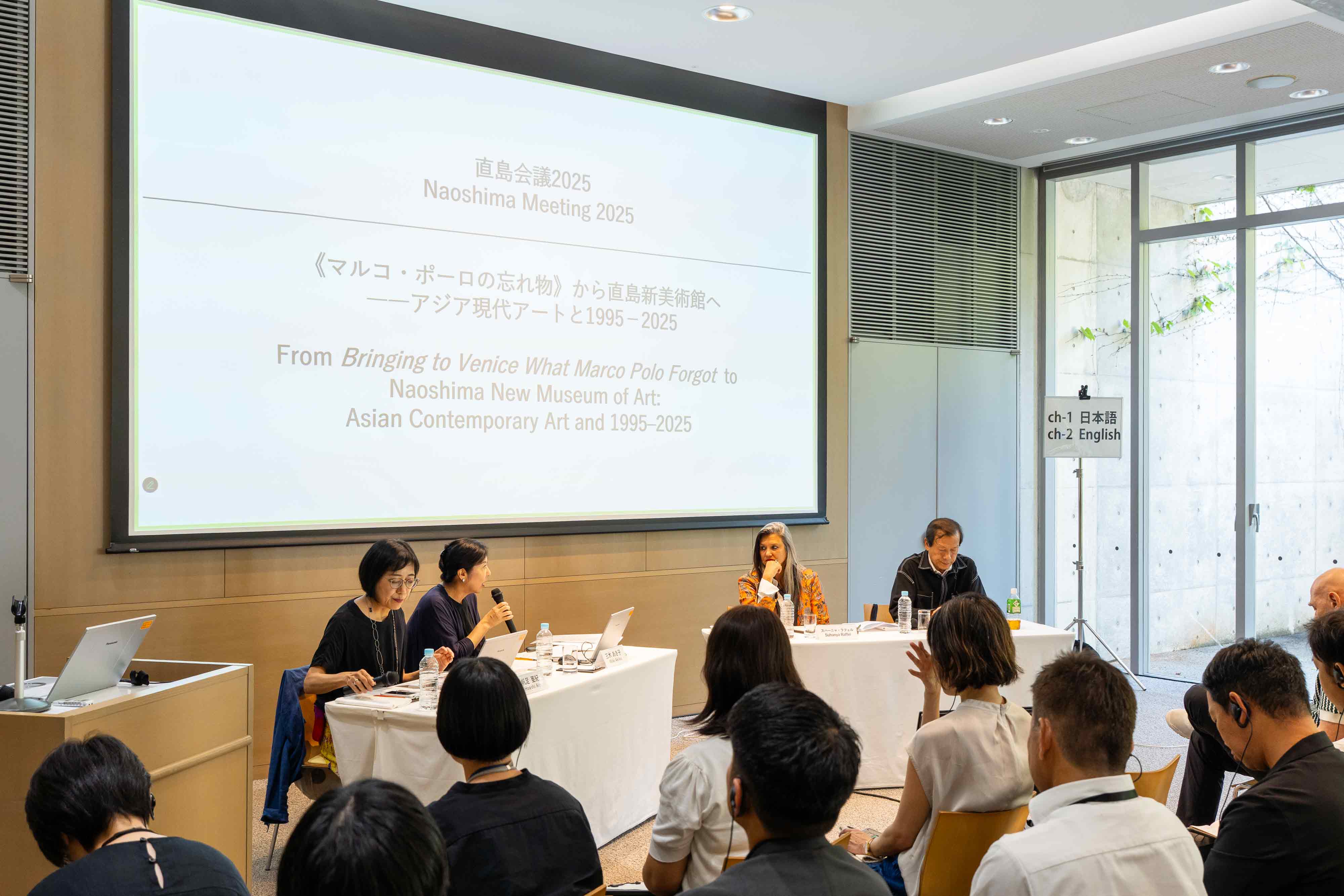
Apinan Poshyananda:
Yes, like I mentioned earlier, "trans-" implies "transnational," a transcultural melting pot. Venice is full of "transculture." In the past, Venice was a place where traders, foreigners, people of faith, whether they be Muslim or Catholic or whatever, came to meet. They connected with the world centered on Istanbul, and in many places. So, it was very fitting to have that name at a time when the structure of the Biennale Arte was trying to find its way out. It had been trapped for many decades by the grandiose, the haves and the have-nots. The "haves" meaning that countries such as Britain, France, and Germany have prominent national pavilions in the Giardini, the historic gardens where the Biennale Arte began in 1895. That was the DNA of Venice. That continues, but then TransCulture came, especially with the idea of Marco Polo, a Venetian going to China, and what he brought or forgot to bring back. This idea of cultural flows became very enriching, and it questioned the very structure of the Biennale Arte. So, I think the metaphor was very rich, and artists were selected equally in terms of presentation and territorial views, and those artists had the eagerness, the daring, the daring to create a jungle in the Grand Canal. I can tell you this: it will never be repeated. It was that challenging.
Miki:
Thank you. In fact, 1995, when the TransCulture exhibition was held, marked the 100th anniversary of the Venice Biennale. At the same time, it was the 40th anniversary of Fukutake Publishing, and also the year the company changed its name to Benesse Corporation. As I mentioned earlier, it was through Honorary Chairman Soichiro Fukutake's strong determination to communicate with the world from a remote islandーunder the philosophy brand "Benesse," meaning "to live well"ーthat the decision was made to hold an exhibition at the Venice Biennale.
One important aspect of the meaning of Venice as a venue was that Venice and Naoshima are connected by the sea. This was not a connection based on land, but one formed by the sea. I think that this different, sea-based perspective symbolized the need to consider an alternative perspective and way of living relative to the era, one different from before, and that this is why Venice was chosen.
The reason we named the exhibition TransCulture was, as I mentioned briefly earlier, that the 1990s were a time when the Cold War structure had ended and the world was opening up. It was a period in which connections began to form with places that had previously been unreachable or cut off from communication. Another major factor was the digital revolution. I remember using email for the first time while preparing for the exhibition. Until then, nearly all communication had been conducted by fax, but even if it was not yet the internet as we know it today, methods of communication were clearly beginning to change.
Against the backdrop of reflection on the Cold War era, there was a shared sense at the time that it was important not to build walls, but to create connections. One more point to add is that TransCulture was not limited to nations or ethnicities alone. Questions of gender and sexuality, what we now refer to as LGBTQ issues, were also included. Recognizing the existence of such minority groups was likewise part of the conceptual background of the exhibition.
Hoashi:
One key phrase in this discussion is "thirty years." In Japan, we often look back at the last thirty years and describe it as decades of stagnated economy and decline of national power. When we look to Asia, however, although there was the IMF financial crisis in 1997, we see cities such as Bangkok and Hong Kong being successful in riding the wave of the so-called global economy and developing economically, gaining more visibility than Japan.
That Benesse Art Site Naoshima has slowly but surely opened more than thirty facilities over the last thirty years. I think this was possible due to what Naoshima stands for. Looking into the future, how do you like to see Naoshima's art projects to develop from the perspectives of Southeast Asia and East Asia?
Suhanya Raffel:
I think that DNA is already here in Naoshima, because if you look ahead to the next thirty years, the climate crisisーecology and the environmentーare clearly very important, and that is already embedded in the project here. So, I think we, those in other parts of Asia, have a lot to learn from this project about what sustainability can look like, and how we can sustain our environment and our communities. I think that DNA is here. We should look here. And we know that our institutions, our cultural institutions, have to pay attention to this, a most urgent issue in the world, and it's part of the economic, political, and social tensions that we see. War is also a result of that breakdown, and people urgently want that discussion. So I think to go back to where you live, to your home, to your neighborhood, is critical. But maybe it is also making us think about what we do need to take care of each other more. But I would hate to lose our connections with each other, something I think needs to always be discussed as a way of sustaining what we have.
Hoashi:
Certainly, Naoshima already seems to be forward-looking, with its emphasis on ecology, coexistence with nature, sustainability, ways of living on the island, and developing an environment in which art is embedded. Mr. Poshyananda, how are environmental issues being considered in Bangkok?
Apinan Poshyananda:
In 2004, there was a big tsunami in the Andaman Sea, in southern Thailand. Many of those islands have a similar structure, and many people didn't know what experiencing a tsunami is like. They didn't understand. But suddenly, more than 2,000 lives ended on Boxing Day, December 26th. Then the people realized that nothing is more powerful than nature. One year later, to commemorate that event, we had many art activities at a dam in that area. We asked Marina Abramović to come again for one of the performances, and she created a performance and a video recording of her work called Sea Punishing. "Sea punishing" is from a Greek myth in which the sea rose up to fight. Seawater spilled up onto the land and killed the inhabitants there. But when the storm and tsunami die down, the gods punish the sea.
This cycle of punishment is an analogy for humanity. Human beings never win against nature. So in thirty years, how many tsunami will have occurred? You live with trauma and danger. You live with environmental events. Whereas people like us, we're not aware. We don't know what's going on, and when it comes, we're unprepared. That's why I said from the beginning, I envy how all of you live in this environment with nature, always conscious of what might happen tomorrow, or in five minutes. You build your houses in such a way that they absorb tremors, and you learn so that when it comes, you're prepared. Whereas other people, they just hope that the gods will not punish them.
So, it comes back to Benesse. How to live well. In thirty years, maybe there will be sixty museums or institutions around here. We have to designate the torchbearers. A new generation must carry on the work of Akiko. We have to continue providing a beam of light. So what specifically are we talking about? We're talking about young people coming back for jobs to continue this heritage, finding essential jobs like maintaining the artworks and caring for the sites. It's not like young people have to go away to big cities to find jobs, because big cities may not be a good place to live anymore. I'm just saying that for the next thirty years, we have to make preparations now to cultivate the "young blood" that will continue. That's not easy, if only because there will be thirty institutions where we'll need to take care of each room, each space. When you go to the ANDO MUSEUM, you see a specific kind of caring. When you go to Teshima, you see another kind of caring.
Benesse means good living and good caring. When we think of this, we understand that what we need to do is actually very simple. Thank you.
Hoashi:
You've noted that Naoshima in particular, has established a certain standing through the seamless coexistence of art and nature. However, looking thirty years into the future, the challenge now lies in nurturing the next generation and cultivating a community who will think about how museums should be sustained for the long term.
Ms. Miki, could you offer some concluding remarks?
Miki:
We've been speaking of looking thirty years ahead, but Honorary Chairman Fukutake actually speaks of looking three hundred years into the future. When the Naoshima New Museum of Art was being planned, he spoke of creating a building that would last for three hundred years. Tadao Ando also gave careful consideration to materials and other aspects with that in mind. What this means, I think, is an awareness that human beings are creatures who forget easily. Forgetting is sometimes necessary in order to live, but at the same time, not forgetting so we avoid repeating the same mistakes, remembering and passing on a spiritual legacy are also vitally important. I believe this way of thinking was one of the reasons the Naoshima New Museum of Art was created.
Fukutake often refers to the Naoshima New Museum of Art as a "culmination," and I think there may also have been a desire to create it as a way of continually recalling the time when the art project in Naoshima first began. He felt anger at the situation remote islands found themselves in at the time, and it was through something like the critical spirit of artists toward society embodied in their work that he sought to change that situation ー that is where it all began. It is that spirit which I hope will continue to be carried on, with the Naoshima New Museum of Art remaining as the vessel through which it is passed down.
We have also touched on Naoshima's foresight. Apinan said that the exhibition he curated in Venice was inspired by the TransCulture exhibition, and in Thailand there is not only the Bangkok Art Biennale but also the Thailand Biennale, which moves from region to region across the country. It began in Krabi, then went to Chiang Rai, and in 2026, it will be held in Phuket. I understand this biennale takes the Setouchi Triennale as its prototype.
I think today we have confirmed that Naoshima is not simply known as a tourist destination. Rather, the seeds sown through our activities here have spread to many cities across Asia and have exerted real influence. The fact that the Naoshima New Museum of Art focuses on Asian contemporary art is part of this broader flow, and I hope you have also understood that this focus did not emerge suddenly. There was a long process, built on networks among specialists, that led to this emphasis on Asian contemporary art. I believe the shift in 2016 of the Benesse Prize to Asia was particularly significant.
Suhanya has served as a juror for the Benesse Prize, and in this way, through the sharing of information and the expansion of networks, the Naoshima New Museum of Art came into being. It goes without saying that it would be impossible to fully look back, in just two hours, on the thirty years behind the museum's opening, but today is just a starting point, and I hope that by continuing to examine this in various places going forward, we can carry these lessons into the next thirty years, and toward the three hundred years beyond.
Speaker Profiles
Apinan Poshyananda
(Chief Executive and Artistic Director, Bangkok Art Biennale)
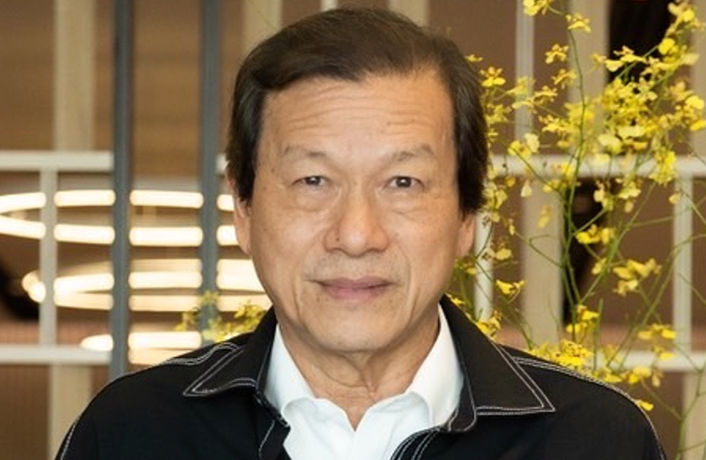
Apinan Poshyananda
(Chief Executive and Artistic Director, Bangkok Art Biennale)
Poshyananda was Director-General, the Office of Contemporary Art and Culture, Director-General, the Cultural Promotion Department and Permanent Secretary, Ministry of Culture, Thailand. He initiated the Silpathorn Art Award and Art fund for Thai artists. He commissioned the Thai Pavilion at the Venice Biennale (2003, 2005, 2007) and curated international exhibitions, including Asia-Pacific Triennial of Contemporary Art, Brisbane (Thai section, 1993, and Australian section, 1996); guest curator, "Heri Dono" (Japan Foundation, Tokyo, 2000); "Show Me Thai" (MOT, 2009); Bangkok Art Biennale (2018, 2020, 2022, 2024, 2026); "The Spirits of Maritime Crossing" at Venice Biennale (2024,2026).
Suhanya Raffel
(Museum Director, M+)
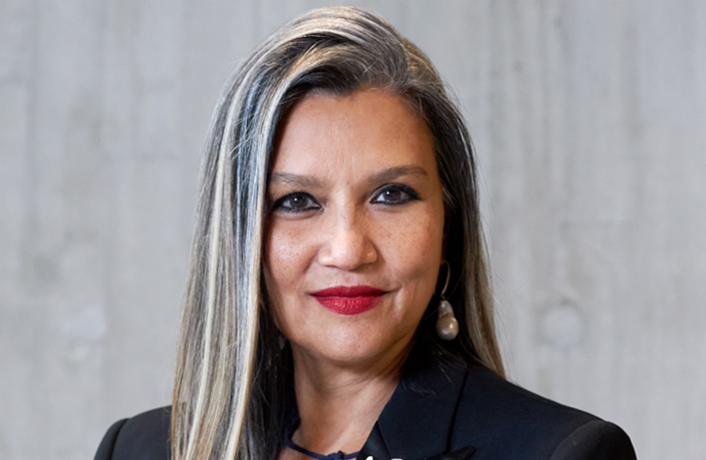
Suhanya Raffel
(Museum Director, M+)
Suhanya Raffel is the Museum Director of M+ in Hong Kong's West Kowloon Cultural District. Since her appointment in 2016, she has overseen all museum activities at M+, including acquisitions, programming, collections care, development, research, institutional collaborations, and museum operations. She was instrumental in building the contemporary Asia Pacific collection and led its Asia Pacific Triennial of Contemporary Art. Raffel is the President of CIMAM, the International Committee for Museums and Collections of Modern Art (2023-2025), and she has served on the CIMAM Board since 2016.
Miki Akiko
(Director, Naoshima New Museum of Art / International Artistic Director, Benesse Art Site Naoshima)
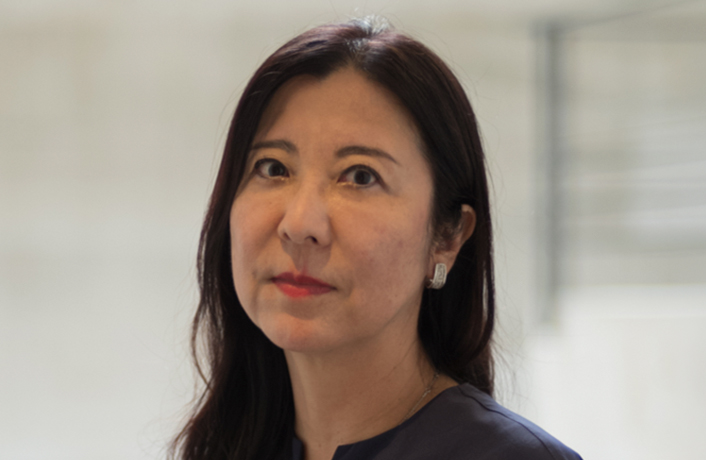
Miki Akiko
(Director, Naoshima New Museum of Art / International Artistic Director, Benesse Art Site Naoshima)
Chief and Senior Curator, Palais de Tokyo (Paris, 2000-2014); Artistic Director (2011) and Co-Director (2017) of the Yokohama Triennale; and more. Engaged in planning international exhibitions for the Taipei Biennial (1998) and Bangkok Art Biennale (2024) as well as for key museums around the world including the Barbican Art Gallery (London), Taipei Fine Art Museum, National Museum of Contemporary Art (Seoul), Mori Art Museum (Tokyo), Yokohama Museum of Art, and Kyoto City KYOCERA Museum of Art (Kyoto).
Moderator
Hoashi Aki
(Manager, International Div. & Curatorial Dept., Yokohama Museum of Art / Deputy Executive Director, Yokohama Triennale Organizing Committee)
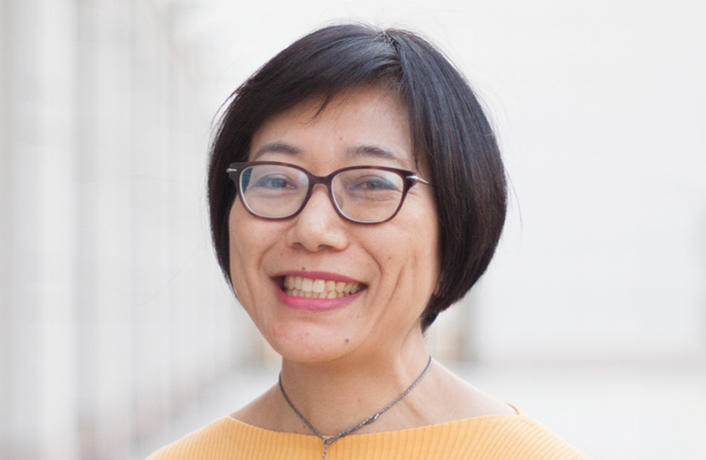
Moderator
Hoashi Aki
(Manager, International Div. & Curatorial Dept., Yokohama Museum of Art / Deputy Executive Director, Yokohama Triennale Organizing Committee)
After obtaining a master's degree from City University (London) in Museum and Gallery Administration, she worked as a freelance coordinator from 1996 for the Japan Foundation's art exchange program in Asia (-2010) and administered the Artist in Residence program in Ibaraki Prefecture (2003-2007). Joined the Yokohama Triennale Organizing Committee in 2010 and has been engaged in the Yokohama Triennale since its 4th exhibition in 2011. Has been affiliated with the Yokohama Museum of Art since 2016.