Naoshima Meeting
2025
From Bringing to Venice What
Marco Polo Forgot to the
Naoshima New Museum of Art:
The Trajectory with Asian
Contemporary Art 1995–2025
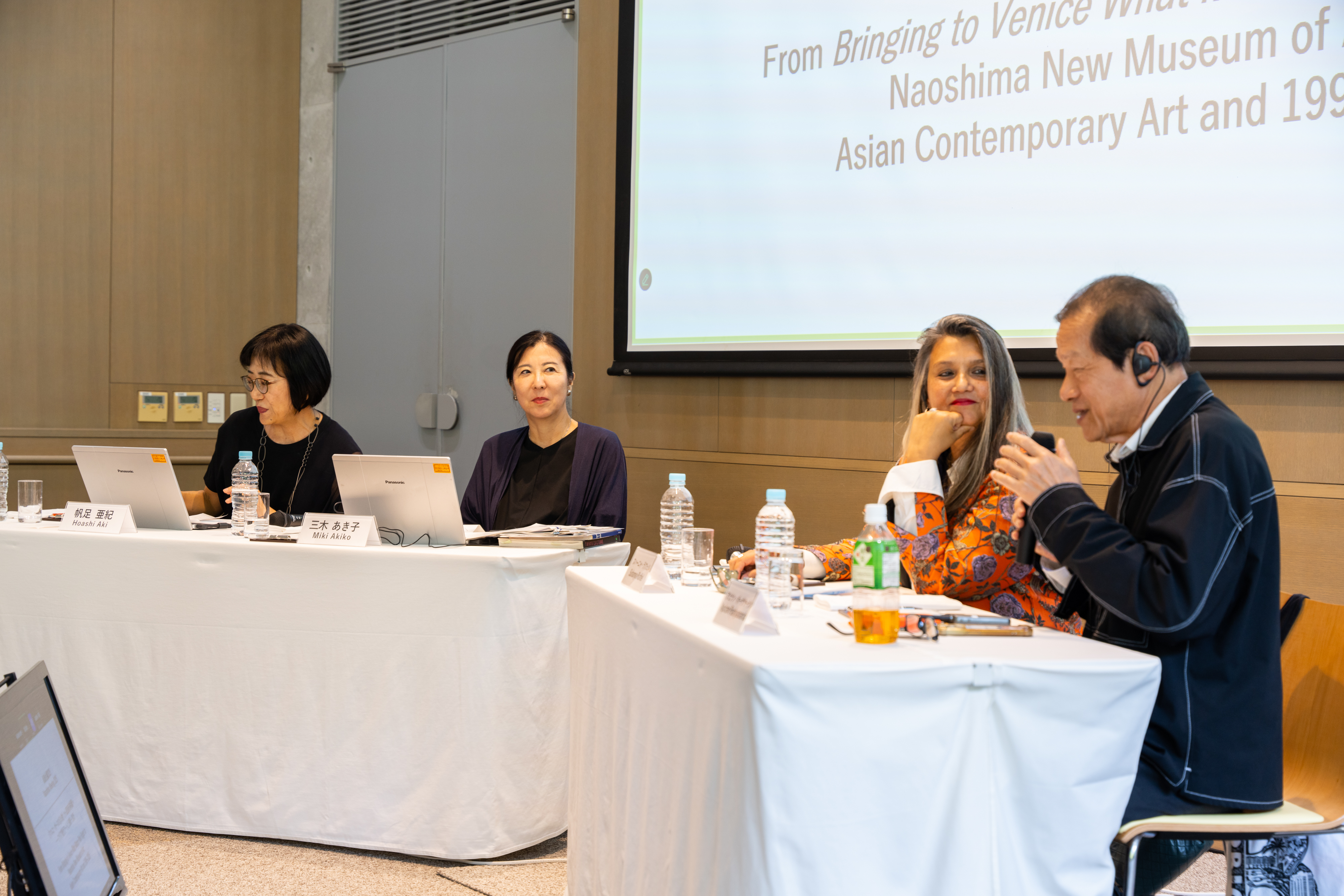
Naoshima Meeting
2025
From Bringing to Venice What
Marco Polo Forgot to the
Naoshima New Museum of Art:
The Trajectory with Asian
Contemporary Art 1995–2025
-
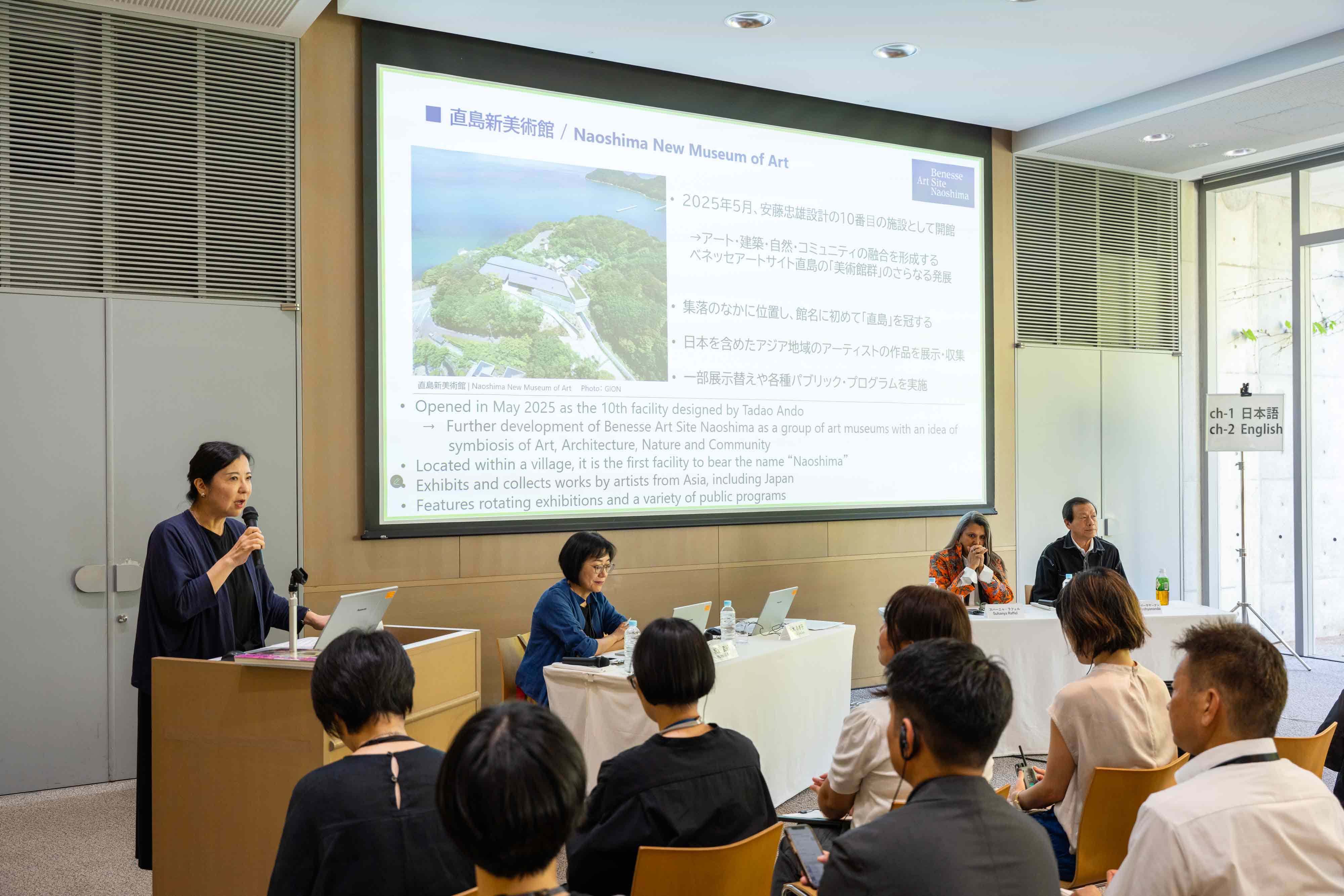
3. Introduction 2 by Miki Akiko
Introduction 2 by Miki Akiko
Miki:
The same is true of the activities of Benesse Art Site Naoshima, but it is clear that the international rise of Asian contemporary art began to show early signs in the 1980s and became more concrete in the 1990s. Globally, the 1980s were a period of transition from modernism to postmodernism. In Japan, this was the height of the bubble economy and a time when so-called "Saison culture" flourished, with art gaining prominence within the currents of advertising and commercialism.
Around that time, a key moment that drew attention within the Asian contemporary art scene was the inauguration of the Bangladesh Biennale in 1981. Another exhibition to note is the Primitivism in 20th Century Art exhibition, held at the Museum of Modern Art in New York in 1984. Although this exhibition was groundbreaking, it was criticized for reproducing colonialism because it ignored context and focused solely on formal, visual aspects. Nevertheless, it was meaningful in that it signaled the growing interest of Western museums in the cultures and arts of regions beyond Europe and North America.
In 1985, Tetsuhiko Fukutake, the founding president of Fukutake Publishing [now Benesse Corporation], met with Chikatsugu Miyake, who was then mayor of Naoshima, on the island, and this encounter marked the true beginning of what would become the "Naoshima Project." In 1986, however, Tetsuhiko passed away suddenly, and Honorary Chairman Soichiro Fukutake assumed the position of president. Carrying on Tetsuhiko's vision, he set the Naoshima art project in motion.
In the contemporary art world, beginning in 1988, Japanese artists such as Tatsuo Miyajima and Yasumasa Morimura began to be introduced in the Aperto of the Venice Biennale. Then, in 1989, a year that can be described as a historical turning point, the Tiananmen Square incident occurred in China. Just before that event, the China/Avant-Garde exhibition was held at the National Art Museum of China. It is often said that the artists' radical actions in that exhibition conveyed a sense of foreboding, almost as if presaging the Tiananmen incident. In the same year, the Berlin Wall fell.
In the field of contemporary art, the Centre Pompidou in Paris presented the exhibition Magiciens de la Terre, which included works by Japanese artists as well as artists from across Asia. One hundred contemporary artists from around the world were selected, without distinguishing between Western and non-Western art. Objects such as masks and mandalasーthings other than contemporary artworksーwere exhibited alongside them, while Westernized modern art was excluded, making for an extremely innovative approach.
With the arrival of the 1990s, an "Asian art boom" emerged in Japan. One contributing factor was the active role played by the ASEAN Culture Center of the Japan Foundationーlater renamed the Asia Centerーin organizing exhibitions of Asian contemporary art. In France, the first large-scale exhibition of contemporary Chinese art was held. One reason it took place in France was that Chinese artists who had come for the installation of Magiciens de la Terre were unable to return home because of the Tiananmen incident. It was the artists and a curator who ended up remaining in France whose presence led to the exhibition being held.
In 1992, the Chiang Mai Social Installationーan exhibition using the urban environmentーwas held in Thailand. Around this time, biennales and triennales began to be established across Asia, including the Asia Pacific Triennial and the Gwangju Biennale. The Singapore Art Museum opened in 1996, and in 1997, the Art House Project was launched in Naoshima. At the Cities on the Move exhibition that same year, Western curators introduced Asian artists from a shared sense of contemporaneity. In 1998, the Taipei Biennial, in which I was also involved, was held, and in 1999, the Fukuoka Asian Art Museum, with its focus on the Asia region, opened.
In the 2000s, initiatives such as the Yokohama Triennale, Busan Biennale, Singapore Biennale, and Asian Art Biennial in Taiwan began. Cai Guo-Qiang served as Artistic Director for the Beijing Olympics. In 2008, the Bangkok Art and Culture Centre opened, and around this time, more commercially oriented projects, such as art fairs, began to stand out. In 2010, a film by the artist Apichatpong Weerasethakul won the Palme d'Or at the Cannes Film Festival. Biennales also began in Aichi and in Kochi-Muziris in India. In 2013, Art Basel, considered one of the most important art fairs in the world, began to be held in Hong Kong. In 2018, three biennales were launched in Thailand, and both the Bangkok Art Biennale and the Thailand Biennale continue to this day. In 2021, M+ opened, and in 2022, the artist collective ruangrupa from Indonesia was appointed as Artistic Director of Documenta, a position comparable in stature to that of the Venice Biennale.
This has been, admittedly, a fragmentary account, but I hope it has introduced, through a few symbolic episodes, how Asian contemporary art has developed from an international perspective. With that, I would now like to invite Apinan and Suhanya to share their individual perspectives.
Speaker Profiles
Miki Akiko
(Director, Naoshima New Museum of Art / International Artistic Director, Benesse Art Site Naoshima)
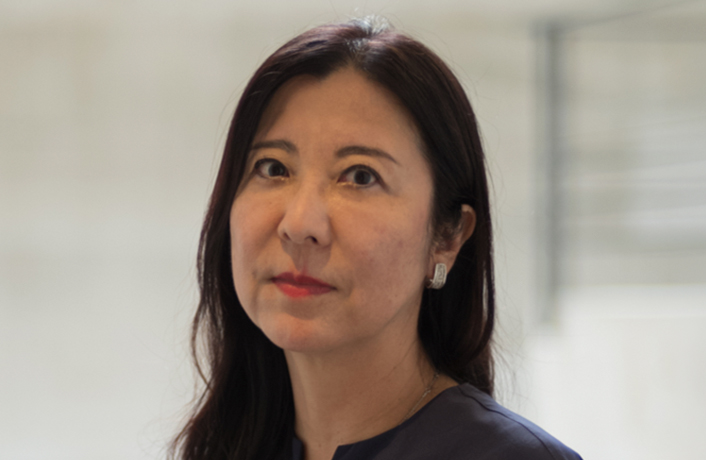
Miki Akiko
(Director, Naoshima New Museum of Art / International Artistic Director, Benesse Art Site Naoshima)
Chief and Senior Curator, Palais de Tokyo (Paris, 2000-2014); Artistic Director (2011) and Co-Director (2017) of the Yokohama Triennale; and more. Engaged in planning international exhibitions for the Taipei Biennial (1998) and Bangkok Art Biennale (2024) as well as for key museums around the world including the Barbican Art Gallery (London), Taipei Fine Art Museum, National Museum of Contemporary Art (Seoul), Mori Art Museum (Tokyo), Yokohama Museum of Art, and Kyoto City KYOCERA Museum of Art (Kyoto).