Naoshima Meeting
2025
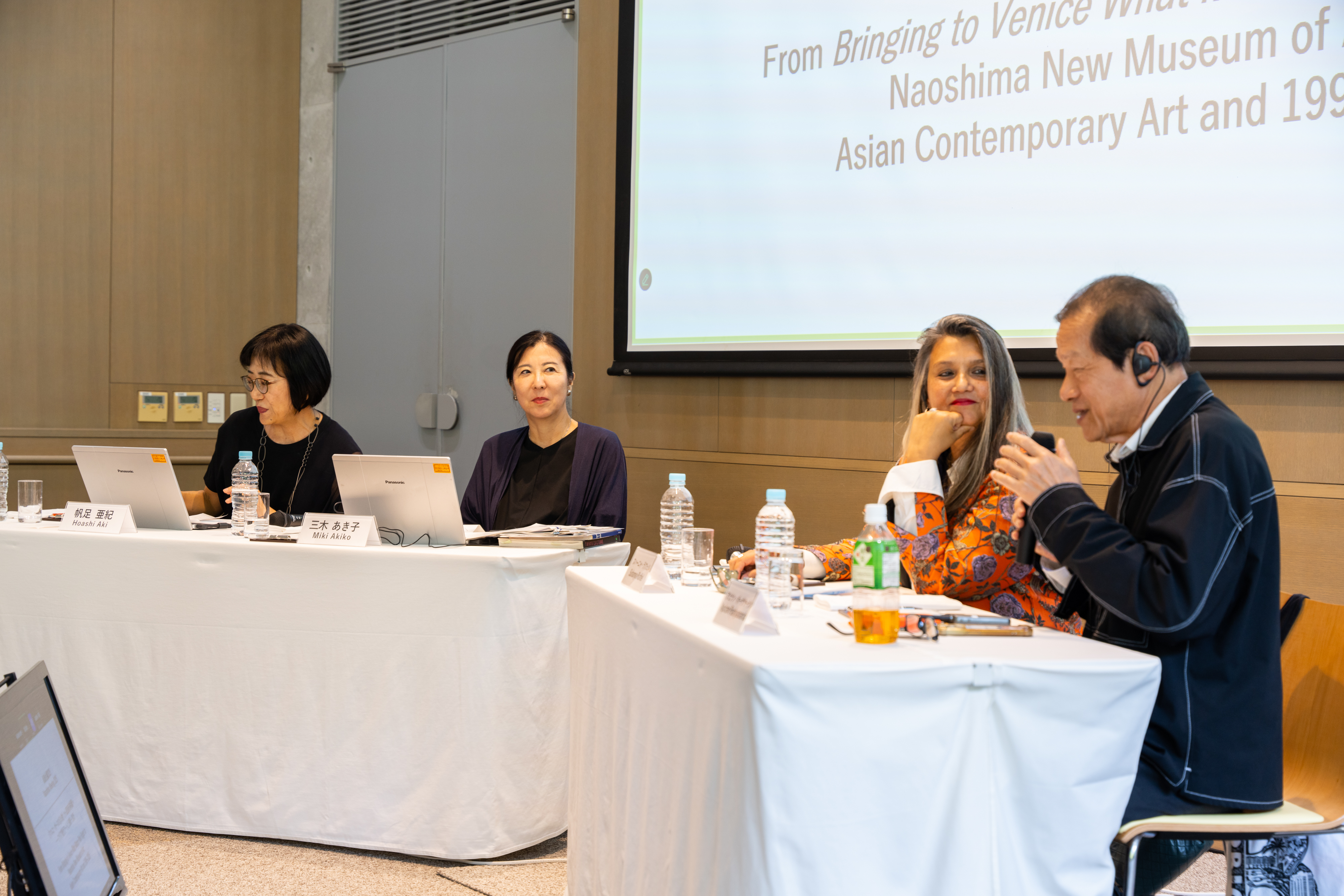
From Bringing to Venice What
Marco Polo Forgot to the
Naoshima New Museum of Art:
The Trajectory with Asian
Contemporary Art 1995–2025
Naoshima Meeting
2025
From Bringing to Venice What
Marco Polo Forgot to the
Naoshima New Museum of Art:
The Trajectory with Asian
Contemporary Art 1995–2025
-
5. Presentation by Suhanya Raffel
Presentation by Suhanya Raffel
Suhanya Raffel:
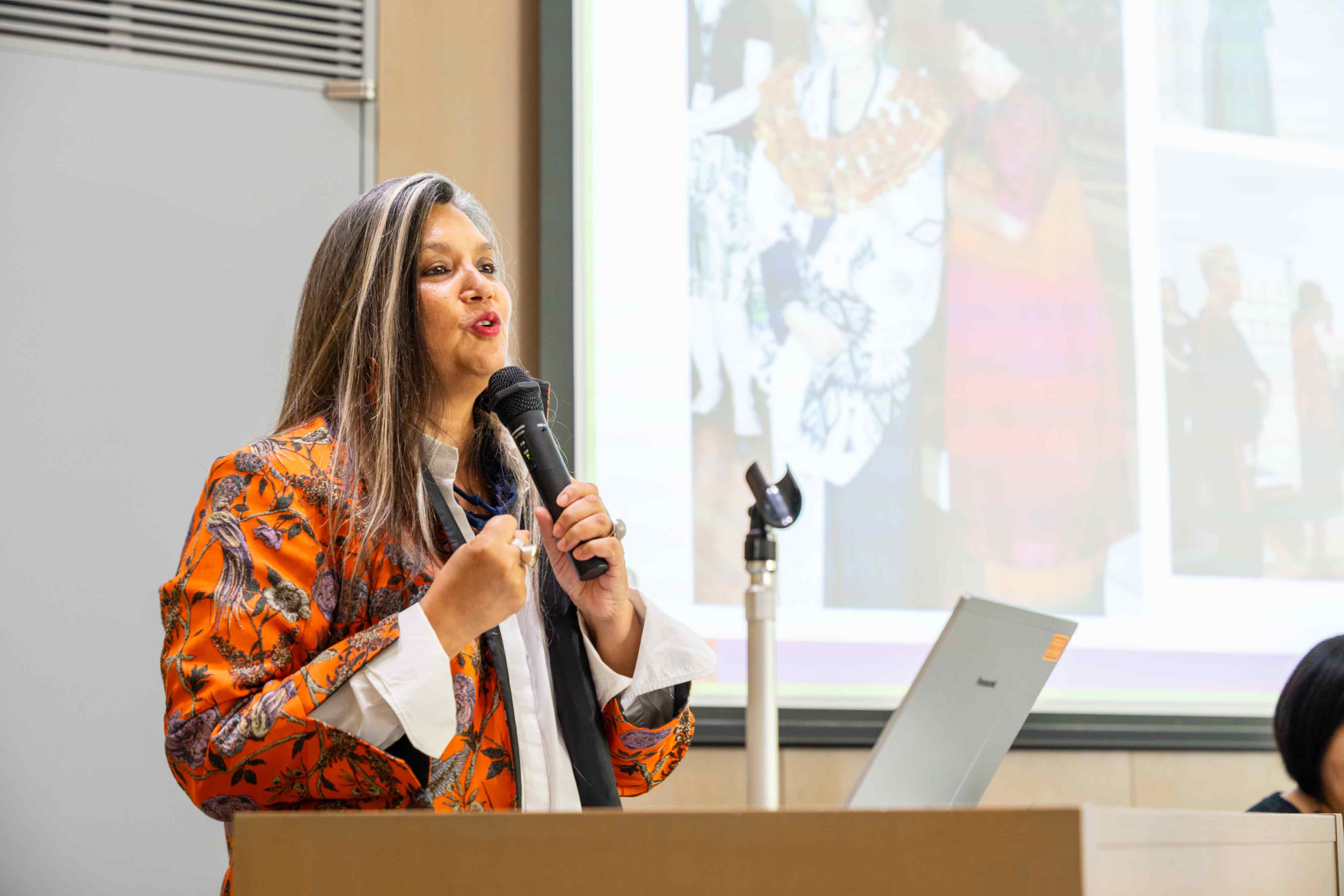
Thank you, Apinan. I've been to Naoshima many times for different reasons, and it's a huge privilege to be here for this particular occasion, to talk about the thirty years of conversations we've all been involved with as a sector.
I'll begin by showing you images of some of the work I've done, particularly as part of the Asia Pacific Triennial (APT), a recurring exhibition in Brisbane, Australia at the Queensland Art Gallery that began in 1993. This event is unusual because it is unlike many Biennales or Triennales that are named for the city from which they originated, cities like Bangkok, Venice, or Yokohama. The Asia Pacific Triennial did something different, deciding to organize a recurrent exhibition around a geography ー the Asia-Pacific. It is worth noting that when you look at the most successful international Biennales, I think they happen in cities that are not at the center, but rather on a periphery.
When the APT began in Queensland in 1993, one of its critical proposals was that Australia sits at the fulcrum of Asia and the Pacific, allowing works to come from many places. We could include First Nations voices, which resonates strongly in Australia. These are voices we have been listening to far more these days because they have much to say about our environment, our well-being, and how we should shape our futures. It was really important to be able to work with artists from across these regions and think about what an institution, a collecting institution, a museum, brings to that conversation. I believe this is also true here on Naoshima, which hosts parts of the Setouchi Triennale, has many museums and has formed a strong voice. It is this comingling that fosters a rich dialogue about collecting, institutions and communities.
A Biennale or a Triennale is a very different kind of temporality. These are pictures of some of the artworks and artists that I worked with over twenty years in Queensland, resulting in an extraordinary collection of contemporary Asia-Pacific art. For many Asia Pacific artists, our institution, through this collection, was the first to acquire their work. It was wonderful for me to have been involved in helping that dialogue become something very international, because we're also here to celebrate how this region is now fostering and talking about our artists, our architects, and our creative makers as very important in a globalized world.
We now go to Hong Kong. I started in 2016, so it's coming up to nine years this year. I just want to begin by saying that this is a huge infrastructure project the Hong Kong government invested in because it realized that a great city needs great cultural institutions. Hong Kong was known as a financial hub and for innovation and technology, all kinds of things, but not for culture. So, it made major investments over a long time to actually realize these institutions, of which we now have seven including M+, which opened in 2021. When we go to London, New York, Paris, Venice, Tokyo, Naoshima, and now Hong Kongーit's the cultural institutions that we remember.
This is a big project for me. I worked on the museum's construction for five years, and now it's been four years since we opened. So, what were we doing during construction? We were building our audienceーbecause a museum has to reach people and help them understand what arts and culture can do. We had a little mantra that M+ was more than a museum, more than a building. It actually began as a major public consultation to decide what kind of museum it should become. M+ means "museum and more." It's a museum for the many disciplines of the 21st century: art, design, moving images, installations, popular culture, street culture... And to build M+ as an institutionーnot just a buildingーwe did a number of things, which we still do today. For example, M+ Rover is a travelling studio. Prior to opening the formal museum we went to primary and secondary schools and community centres across Hong Kong to talk about what M+ does. We didn't bring works from the collection; instead, we brought peopleーmakers. That's how we opened up a conversation about what the institution could be. Another initiative was M+ Matters, our pedagogic platform, where we held symposia like this to help decide where the collection should go.
When we opened the museum, we charged admission. We couldn't be a free institution, because the investment was so large that we needed to build ways to sustain ourselves. Financial sustainability is a big part of that, and that requires ticketing. But we also think about how to bring these audiences to certain free activities. This gives you a snapshot of the kinds of collections we have shown and the programs we have launched since opening. We also research major special exhibitions and travel them out into the world. We did a wonderful Yayoi Kusama exhibition that went to Bilbao in Spain and then to Porto in Portugal. The museum's first architecture exhibition 'I.M.Pei: Life is Architecture' went to Shanghai, and the next stop is Doha, Qatar. These are examples of exhibitions we have done within the museum across the disciplines of art, design, architecture, and moving images.
This is what we have in the museum right now. We mounted a major exhibition with the Musée Picasso, Paris, called Picasso for Asia. We wanted to do a Picasso exhibition, but not just bring Picasso's works; we wanted to put him in dialogue with Asian contemporary artists and our collection. So there was dialogue between Musée Picasso in Paris and M+ in Hong Kong, the result of which was Picasso being seen with Asian artists for the first time. Until now, when he has been presented in group exhibitions, it is predominantly with other Europeans or French artists from his period. It was a productive challenge for us to take him somewhere else. When I reflect on what we accomplished through that three-year conversation with our Paris colleagues in the lead up to the opening of the exhibition, it was characterized by sense of courage to begin a dialogue that might not normally have been welcomedーto say, "We can do this."
I also want to show you something of the museum's architecture, since we are also a museum of visual culture, of film and moving images. Our architecture includes a moving-image facade, 60 meters high and 120 meters across. It's a very large piece of infrastructure in the city. Hong Kong is full of lights, full of moving images dedicated to advertising for brands like Chanel and Prada. You see them everywhere. But our screen feature the works of active artists. We work with commercial entities to make that happen. This is a Singaporean artist who looked at Hong Kong cinema from the 1990s to create his own interpretation via artificial intelligence of what cinema looks like today. This is a very brief clip showing what that moving image looks like in the city at night. It's a silent screen, so the soundtrack is, of course, the sounds of the city. It's a beautiful scene that happens every night from six in the evening to ten at night. We have multiple commissions every year.
Speaking of cinema, we've also established an Asian Avant-Garde Film Festival, which is coupled with an Asian Avant-Garde Circulation library, a cinema library for which we are collecting experimental films. These films cannot be easily found, and we saw a need to gather them together. The film festival celebrates Asia's Avant-Garde history, a very strong history.
And in the evenings, we've held M+ at Nightーan event where the museum transforms into something completely different. Young people come here to experience the museum through DJ, Music, dance, and access to all our gallery spaces.
M+ is Asia's global museum of contemporary visual culture. We have exhibits that are dedicated to the arts, design, architecture, moving images, and Hong Kong visual culture from the 20th and 21st centuries. We opened to the public in November 2021, deep in COVID times, so only people from Hong Kong visited us in that first year. Hong Kong really didn't open up globally until early 2023. As of August 17th, 2025, 9.3 million people have come to M+, making it one of the world's most-visited cultural institutions. What you will see when you come is over 1,200 works by artists from Hong Kong, mainland China, and throughout Asia. M+ is explicitly a pan-Asian cultural institution, and even when we acquire works by artists and makers from outside Asia, we prioritize those with a direct relationship to Asia. About 20% of the works are by Hong Kong artists.
So, who is our audience? Each year, we welcome around 2.6 million people. Our audience is very young, 84 percent are aged between 18 and 44, and 81 percent have a university education or higher. Thirty percent are from Hong Kong. Of the remaining 70 percent, half are from mainland China. M+ is thus a major tourist attraction. Our mission and vision are to build a world-class cross disciplinary collection that represents our time with a singular global vision from Hong Kong. The Hong Kong roots inform what we do. We consider our collection as being one that brings a very unique perspective to the world of museums, especially those for modern and contemporary art.
Currently, our collection number just under 10,000 objects, including the M+ Sigg Collection. The M+ Sigg Collection was our founding collection of just over 1,500 works of contemporary Chinese art, and the collection has since grown into a much bigger collection, including 66,000 archives, mostly dedicated to the architecture and some design collections. Special collections, artist books, and so on, are in our library. This is already a very significant founding collection. In hindsight, all of this was achieved relatively quickly.
Last year, we knew we needed to develop significant international relationships to make our institution part of a networked global conversation. We have very strong relationships within Asia, but also in London, New York, Paris, LA, Sydney, and Doha, because we want to be an international institution with deep roots in Asia. Our Pan-Asian collection, our Pan-Asian voice, the uniqueness of these archives and collections ensures that we must take them out, that they're seen by as many people as possible. As a result, in 2024, we ranked 21st worldwide on The Art Newspaper's list of the most-visited art museums. Of course, this is only one way of benchmarking and measuring success. There are many other ways, too.
The Hong Kong government has invested heavily in West Kowloon's infrastructure, so at M+, we need to justify that investment and show how we're putting Hong Kong on the global map. We also have to ensure that local audiences will come. Having a high ranking like the one I just mentioned, it's very affirming to say that our local community is at the base of our success, and that they recognize and are part of that success. Without that, we couldn't actually be able to build out. Before M+ opened, there was a huge amount of anxiety within the Hong Kong community about its success. Would we end up being a white elephant? Many Hong Kong media outlets took that stance, but now we have proven ourselves. Without question, we are part of the Hong Kong cultural landscape, and we are embraced as such.
So, with that, I will hand things back to Aki, who's going to take us through a conversation about our various achievements over the past thirty years. I truly feel that this is an incredible reflection of what we have done together, and I look forward to discussing many other interesting things. Thank you.
Speaker Profiles
Suhanya Raffel
(Museum Director, M+)
Suhanya Raffel
(Museum Director, M+)
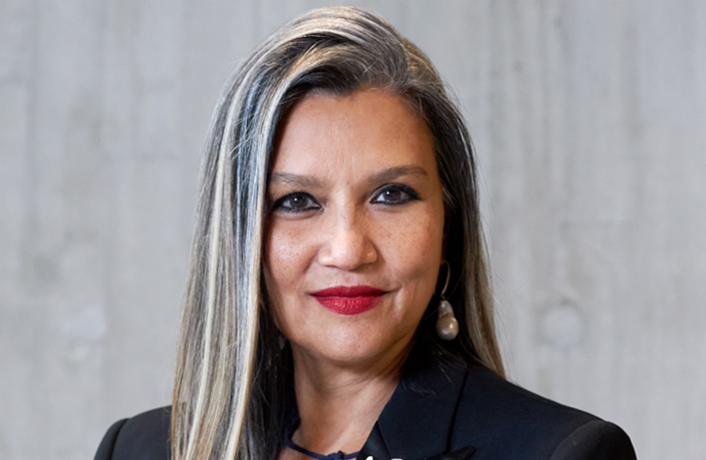
Suhanya Raffel is the Museum Director of M+ in Hong Kong's West Kowloon Cultural District. Since her appointment in 2016, she has overseen all museum activities at M+, including acquisitions, programming, collections care, development, research, institutional collaborations, and museum operations. She was instrumental in building the contemporary Asia Pacific collection and led its Asia Pacific Triennial of Contemporary Art. Raffel is the President of CIMAM, the International Committee for Museums and Collections of Modern Art (2023-2025), and she has served on the CIMAM Board since 2016.